Driving the Alpine Passes: How to Plan a Great Road Trip
Stelvio, Grossglockner, Furka and the Dolomites: when the big Alpine passes open, how to drive hairpins safely, and how to plan a loop that works.
On this page
There's a moment on every big Alpine pass when the trees fall away, the road folds back on itself for the tenth time and you realise you're higher than most of the mountains you drove past that morning. It's one of the best feelings a car journey can give you.
It's also a kind of driving most of us don't do every day: narrow lanes, tight hairpins, long descents and a lot of other people sharing the road. A bit of planning makes all the difference.
Here's how we approach an Alpine pass road trip: which passes to put on the list, when they're open, how to drive them, and how to string them into a loop.
The passes everyone talks about
The Alps have hundreds of paved passes, but these are the ones we see on most wish lists.
| Pass | Country | Approx. summit height |
|---|---|---|
| Col de l'Iseran | France | 2,764 m |
| Stelvio Pass | Italy | 2,757 m |
| Grossglockner High Alpine Road (Hochtor) | Austria | 2,504 m |
| Great St Bernard Pass | Switzerland / Italy | 2,469 m |
| Furka Pass | Switzerland | 2,429 m |
| Passo Pordoi | Italy | 2,239 m |
| Passo Giau | Italy | 2,236 m |
| Susten Pass | Switzerland | 2,224 m |
| Grimsel Pass | Switzerland | 2,164 m |
| Gotthard Pass | Switzerland | 2,106 m |
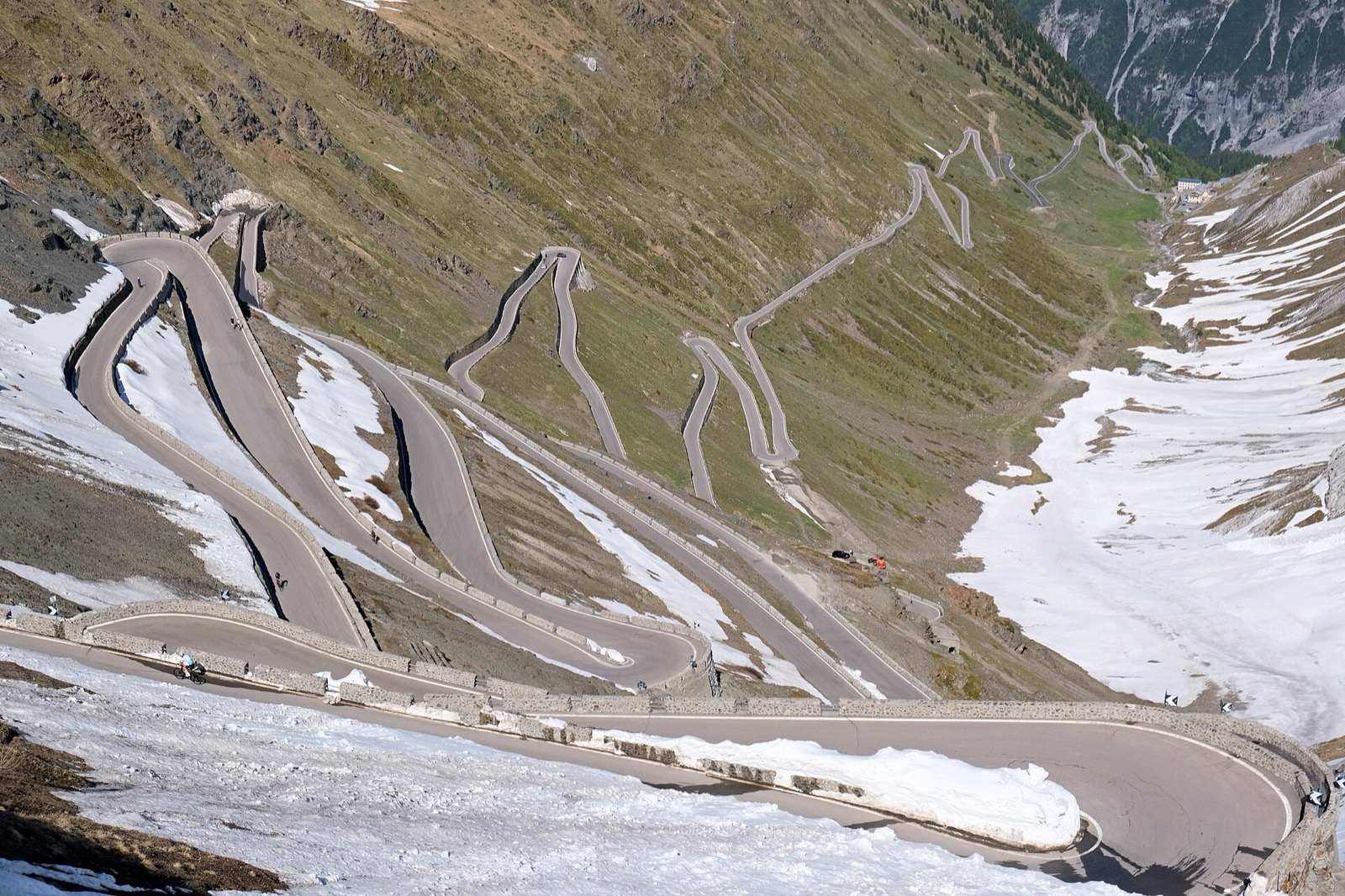
Stelvio is the famous one: dozens of numbered hairpins stacked up the eastern side from Trafoi, and a quieter, more open climb from Bormio on the western side. If you're basing yourself in South Tyrol, our Truden to Bolzano Mountain Drive (44.7 km, rated Hard) makes a good warm-up for the kind of roads the region is known for. You'll find more ideas on our Italy scenic drives page.
The Grossglockner High Alpine Road in Austria is a purpose-built scenic toll road with viewpoints, car parks and a spur road to a glacier viewpoint below the Grossglockner itself. It's a good first big pass. Browse more of the country on our routes in Austria page.
In central Switzerland, Furka, Grimsel and Susten sit close enough together to drive in a single day, and the Gotthard has its famous cobbled Tremola road on the southern side. Great St Bernard links Switzerland and Italy, with a tunnel below for when you'd rather not climb. These passes are classic bike climbs too, so expect riders on every hairpin; our Switzerland cycling routes show where they go.
The Col de l'Iseran in the French Alps is usually counted as the highest paved through-pass in the Alps, and it's often one of the last to open each year. Pair it with the rest of our France scenic drives.
The Dolomites passes (Sella, Pordoi, Gardena, Campolongo and Giau among them) are shorter climbs between huge rock walls, and some of the busiest roads in the Alps in summer.
When the passes are open
This is the first thing to check, and the one people most often get wrong. High passes close for winter, and the season is short.
As a rough guide, most of the big passes are open from around June to October. Some lower or better-equipped roads open earlier, and the highest ones can stay closed well into June after a snowy winter. The Grossglockner road, for example, usually opens earlier in spring than the very highest passes, while Iseran and Stelvio often wait until late May or June.
Even in summer, a pass can close at short notice for snow, rockfall, roadworks or a cycling event. Some roads also have timed closures or restrictions on certain days. So:
- Check the official status the day before and the morning you drive. Road authorities and the pass operators publish opening dates and live status. For the Grossglockner, the official road website has opening times and conditions.
- Have a plan B. Know which tunnel or valley road you'll use if a pass is shut.
- Watch the weather, not just the calendar. It can snow at 2,500 m in August.
Early autumn is lovely: thinner crowds, softer light and golden larches. The trade-off is colder mornings, shorter days and a higher chance of an early closure.
Tolls, vignettes and paying your way
You'll usually pay for the motorways that get you to the mountains rather than for the passes themselves, but the rules differ by country:
- Switzerland and Austria use a motorway vignette, a sticker or digital pass you buy before driving on their motorways.
- Italy and France mostly charge tolls at booths on their motorways, by distance.
- Slovenia also uses a vignette system for its motorways, if you're heading for Vršič or the Julian Alps. More on our Slovenia page.
- A few scenic roads, such as the Grossglockner High Alpine Road, charge their own toll, and some road tunnels (Great St Bernard among them) are tolled too.
Prices and formats change, so check the current rules for each country before you set off. Fines for driving without a valid vignette can be steep.
How to drive a hairpin
Hairpins look intimidating, but they're slow by design. A few habits make them feel calm.
Go in slow, come out smooth. Brake on the straight before the bend, not in it. Pick a low gear, then use gentle throttle through the turn. On a right-hander (in countries that drive on the right), the inside of the bend is very tight and very steep, so swing a little wider while staying firmly in your lane.
Look as far round as you can. Many hairpins are blind. Watch for headlights, shadows and mirrors on the outside of the bend. In places, a short tap of the horn before a blind corner is normal and expected.
Know who has priority. On narrow mountain roads the general rule is that traffic going uphill has priority, because it's harder to restart on a steep slope. In Switzerland, the yellow PostBus has priority on signed mountain postal roads, and you'll hear its three-tone horn before you see it. Big vehicles need the whole road in some hairpins, so wait before the bend rather than in it.
Use the pull-outs. If a queue builds behind you, pull over at the next safe spot and let it pass.
Coming down: engine braking and hot brakes
Most trouble on mountain roads happens on the way down. A long descent can overheat your brakes until they start to fade, which is exactly what you don't want with a hairpin ahead.
A good rule of thumb: come down a pass in the same gear you'd use to drive up it.
- Let the engine do the work. Shift down early so the engine holds your speed, and use the brakes in firm, short applications rather than riding them all the way down.
- Automatics count too. Use the manual or low-gear mode so the gearbox doesn't keep shifting up. Electric and hybrid cars can lean on regenerative braking, but keep an eye on the brakes when the battery is full and regen is limited.
- Notice the warning signs. A burning smell, a soft pedal or a car that won't slow as it should mean it's time to stop at the next safe place and let things cool for a while.
- Watch your temperature on the way up, too. On a hot day, long climbs in low gear can work an engine hard. If the gauge creeps up, ease off and give it a break at a viewpoint.
Sharing the road with cyclists and motorbikes
The big passes are bucket-list climbs for cyclists and riders as much as for drivers, so expect plenty of both, especially on summer weekends.
Cyclists climbing slowly can appear right after a blind bend. Give them generous room when passing, and only pass when you can see that the road ahead is clear. On descents, cyclists can be faster than you'd think and may need the full lane through hairpins. If you're riding a pass yourself, you'll find more ideas on the TrailX blog, and plenty of routes to browse on TrailX trails.
Motorbikes often come in groups and move quickly. Check your mirrors before every bend and before pulling out of a viewpoint.
Planning a loop
The best pass days are loops: climb one pass, drop into a new valley and come home over another. A few classics:
- Furka, Grimsel and Susten. Three Swiss passes that link up into a single loop around the Bernese and Uri Alps. A full day with stops.
- The Sella passes. In the Dolomites, Sella, Pordoi, Campolongo and Gardena ring the Sella massif. Start early: by late morning in July and August the traffic builds quickly.
- Stelvio from both sides. Climb from one side, descend the other, and come back via a neighbouring pass or the valley roads.
- Grossglockner end to end. Drive the toll road north to south (or the other way) and return on a different route, to make the most of your ticket.
A few things we keep in mind when building a loop:
- Expect to be slower than the map says. Pass roads, photo stops and queues behind a coach add up. A loop that looks like three hours on paper can easily fill a day.
- Fill up in the valley. Fuel stations are rare near the summits, and those that exist can be pricey.
- Start early. You'll get quieter roads, cooler brakes and the best light, and you'll be off the high ground before afternoon storms build.
- Save the route offline. Signal is patchy in high valleys. Download the map in the TrailX app before you leave the hotel.
Not every day needs to be a 2,700 m giant. The Lake Geneva to Saanen Alps Drive is a long Swiss day of 245.7 km with 2,437 m of climbing, while the Val Onsernone to Verzasca Drive in Ticino is a shorter 28.4 km outing. In France, the Hautes-Alpes Valley Drive is rated Easy over 105.8 km.
If you're driving in from Germany, the Trostberg Chiemgau Countryside Loop in Bavaria is an Easy 86.9 km loop if you're breaking the journey in Bavaria, and the Black Forest St. Georgen to Freudenstadt drive packs 1,633 m of climbing into 136.3 km.
Before you go
Check the pass status and your plan B. Buy your vignettes. Make sure brakes, tyres and coolant are in good shape, pack warm layers even in July, and leave plenty of time. The passes reward patience: take it slowly, stop often and enjoy the view from the top.
Have a favourite pass, or a loop you think we've missed? Tell us in the TrailX community, or publish your drive so the next road-tripper can find it.
Where to next?
- Plan the Italian Alps: explore Italy, from the Dolomites to the lakes.
- Swiss passes and valleys: browse routes across Switzerland.
- Heading through Germany? Find a warm-up on our Germany scenic drives.
- Find your next trip: explore destinations around the world.
- Share a road you love: publish your trail and help other drivers find it.
- Ready for higher roads? See our guide to crossing Himalayan mountain passes by road and on foot.

Written by
TrailX
Hikers, riders and drivers mapping the world's trails, and sharing what we learn along the way.
Responses