On this page
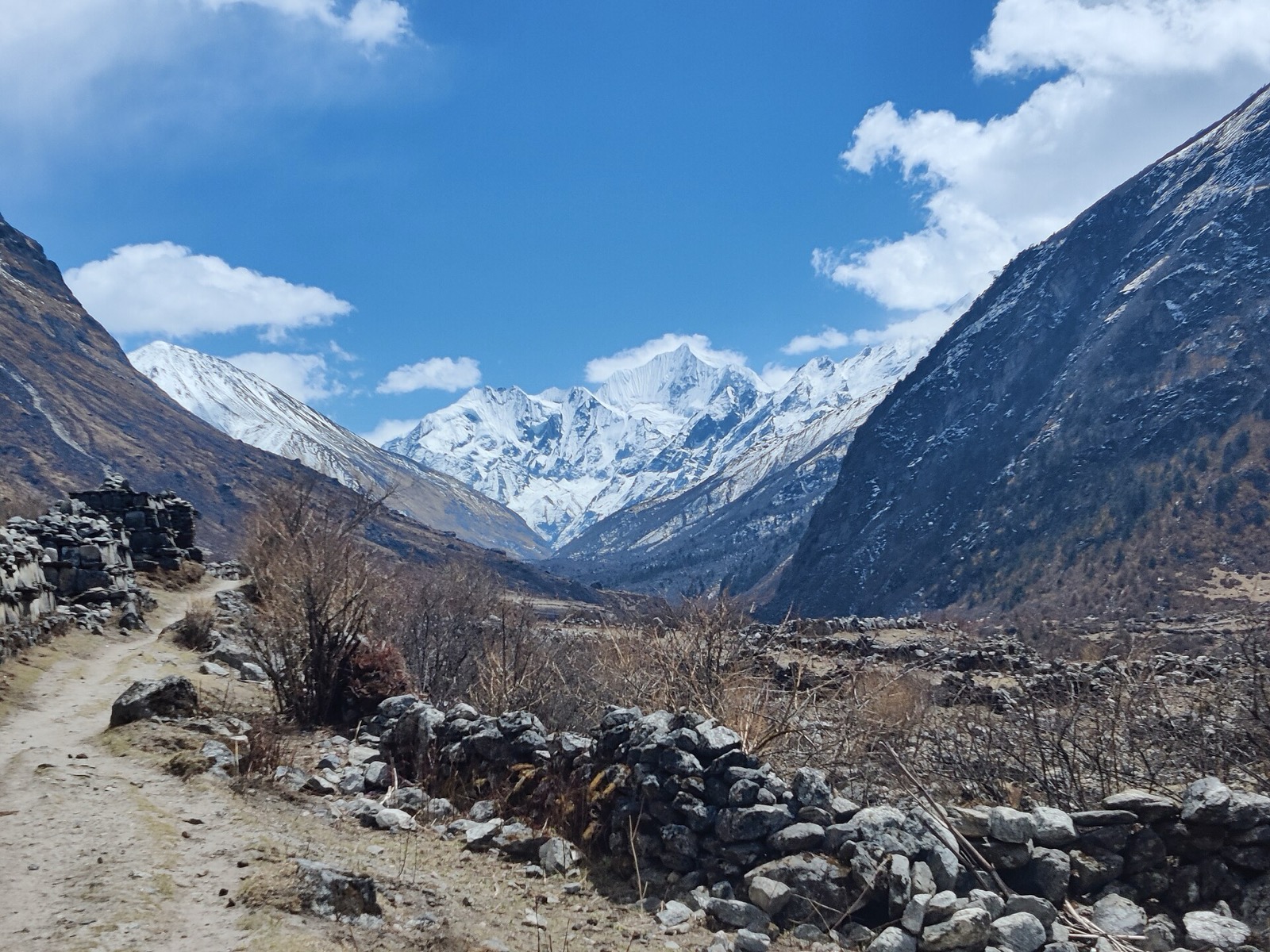
Nepal gets into your head long before you get there. A photo of prayer flags against a white ridge, a friend's story about dal bhat at 4,000 metres, and suddenly you're looking at flights to Kathmandu.
The hard part isn't deciding to go. It's choosing where. From home, the famous routes look like a jumble of unfamiliar place names and very big numbers. Here's how we'd think about a first trek: which region suits you, when to go, what paperwork to expect, and how to give yourself the best chance of enjoying every day of it.
Start with time, not the mountain
Most people pick a trek by name and then try to make the days fit. We'd do it the other way round. Work out how many days you actually have on the ground, subtract a day or two in Kathmandu at each end for permits, jet lag and the odd delayed flight, and see what's left.
That number does most of the choosing for you. A week points you towards Langtang or a short Annapurna foothills walk. Two weeks opens up Everest Base Camp or the Annapurna Circuit. Anything that crosses a high pass needs spare days built in, because weather and altitude don't follow your itinerary.
For a feel of the options, browse hiking routes across Nepal and compare distance and ascent side by side. The ascent number often tells you more.
The four regions most first-timers choose
| Region | Usual gateway | Approx. high point | Typical length | Good for |
|---|---|---|---|---|
| Everest (Khumbu) | Flight to Lukla | Base camp ~5,364 m | Around 12–14 days | Iconic peaks, Sherpa villages, monasteries |
| Annapurna | Pokhara | ~3,200 m (Poon Hill) to ~5,416 m (Thorong La) | 4 days to 2+ weeks | Variety and flexibility |
| Langtang | Road from Kathmandu | ~3,870 m (Kyanjin Gompa) | Around 7–10 days | Short trips, no flight needed |
| Manaslu | Road from Kathmandu | ~5,106 m (Larke Pass) | Around 2 weeks or more | Quieter trails, more remote feel |
Everest
The Khumbu is the trek most people picture: suspension bridges over glacial rivers, Namche Bazaar stacked on its hillside, Tengboche monastery and, eventually, the moraine below the world's highest mountain. Most trekkers fly to Lukla, and that short mountain flight is famously weather-dependent, so build in a buffer day or two at the end.
Our Everest Basecamp trail covers 51.5 km with about 3,274 m of climbing, and it's graded Extreme for a reason: the altitude, not the terrain, is the challenge. If you'd rather walk in from lower down and skip the Lukla flight, the Bupsa to Everest Base Camp Trek starts lower in Solukhumbu and racks up more than 4,700 m of ascent on the way. And for a quieter alternative with turquoise lakes, look at the Gokyo Lake trek. There's more in the Koshi Province hiking collection.
Annapurna
Annapurna is the most flexible region for a first trip. Pokhara is a relaxed base, and you can choose anything from a few days in the foothills to a full high-pass crossing. Shorter options like Poon Hill or the Panchase Trek from Pokhara (22.8 km, around 850 m of ascent) give you big Himalayan views without serious altitude.
At the other end of the scale is the classic Annapurna Circuit over Thorong La, close to 97 km and over 4,100 m of climbing on our map, topping out at a pass of roughly 5,416 m. Road building has changed parts of the circuit over the years, so many trekkers now start higher up the Marsyangdi valley. If you want to focus on the pass itself, see the Thorong La Pass Crossing, and browse the rest of Gandaki Province's hiking routes.
Langtang
Langtang is our usual pick for people with a week and no appetite for small-plane flights. It's reached by road from Kathmandu, and the valley climbs steadily through forest to yak pastures and the monastery village of Kyanjin Gompa. It all lies within Langtang National Park, Nepal's first Himalayan national park.
The Langtang Valley Trek is graded Moderate on TrailX, and the Kyanjin Gompa Hike takes you up to the top of the valley. If you have a few extra days, the sacred lakes at Gosaikunda are a beautiful add-on; our Gosaikunda Lake Trek packs more than 1,100 m of climbing into under 10 km, so take it steadily.
Manaslu
The Manaslu Circuit Trek is a full loop around the world's eighth-highest mountain: 199 km and nearly 8,900 m of ascent on our map, crossing the Larke Pass at around 5,100 m. It's quieter and wilder than Annapurna. It's also a restricted area, which means extra permits and a licensed guide, so for most people it makes a better second trek than a first.
Teahouse trekking: what to expect
On all four of these routes you'll most likely stay in teahouses, family-run lodges that offer a bed, a shared dining room and a menu that somehow includes pizza at 4,000 metres. Rooms are simple, usually twin beds and thin walls. Bathrooms are often shared, and hot showers, charging and wifi usually cost a little extra higher up.
Eat dal bhat. It's filling, fresh, and refills are usually included. And bring cash in rupees: ATMs thin out quickly once you leave the trailheads.
When to go
Nepal's main trekking seasons are autumn (roughly October to November) and spring (roughly March to May).
- Autumn usually brings clear skies and crisp views after the monsoon. It's also the busiest time, so popular lodges fill up.
- Spring is a little warmer, with rhododendrons in bloom on the lower slopes, though afternoon haze and cloud are more common.
- Winter (December to February) can be beautiful and quiet on lower routes, but nights are very cold and high passes may be closed by snow.
- Monsoon (June to September) means rain, leeches, landslides and hidden views on most routes, though rain-shadow areas like Upper Mustang are drier.
For a first trek, aim for one of the main seasons, book early and expect company on the trail.
Permits and guides
Permit rules in Nepal change from time to time, so treat what follows as a general picture and check current requirements before you book.
Most trekking areas sit inside a national park or conservation area, each with its own entry permit. Everest is in Sagarmatha National Park, Langtang in Langtang National Park, and the Annapurna routes in the Annapurna Conservation Area. The TIMS card (Trekkers' Information Management System) has also been required on many routes, and some areas, Manaslu among them, are restricted and need a special permit arranged through a registered agency. Local municipalities sometimes add their own fees too, as the Khumbu does.
In 2023, Nepal announced a rule requiring foreign trekkers in national parks and conservation areas to hire a licensed guide or trek with a registered agency. How it's applied has varied between regions, so check the latest position with the Nepal Tourism Board or a registered trekking agency before you plan to go independently.
Even where a guide isn't strictly required, a good one is worth far more than they cost. They read the weather, notice altitude symptoms before you do, and turn a walk past a village into a conversation with the people who live there.
Porters are worth considering too. Carrying less makes climbing days far more enjoyable, and portering is an important income in the hills. Keep loads reasonable and make sure your agency equips porters for the cold.
Altitude: the part that matters most
Fitness helps, but it won't protect you from altitude sickness. Very fit people get it, and so do people who rush. The well-established guidance is simple:
- Above about 3,000 m, don't increase your sleeping altitude by more than roughly 300–500 m a day.
- Take a rest day every three or four days, or every 1,000 m or so of gain. "Climb high, sleep low" walks on rest days help.
- Drink plenty, go easy on alcohol, and keep walking slowly. It should feel almost too easy.
- Know the symptoms of acute mountain sickness: headache, nausea, loss of appetite, dizziness and poor sleep. If they get worse, stop climbing. If they keep getting worse, go down.
Confusion, stumbling or breathlessness at rest are signs of something more serious: descend straight away. Check that your travel insurance covers trekking at your planned altitude, including helicopter evacuation.
Getting fit for it
You don't need to be an athlete, but you do need to be comfortable walking five to seven hours a day, several days in a row, with plenty of uphill and downhill. In the months before, build up to back-to-back long days on hilly trails with the pack you'll actually use. Steep hills beat flat kilometres.
If you're arriving early, Kathmandu has good warm-up walks on its doorstep. The Shivapuri Gokarna Hike climbs about 700 m into the forested hills on the valley rim, and the Godawari Forest Hike is a shorter outing on the south side of the valley. You'll find more in the Bagamati Province hiking collection.
What to pack
Teahouse trekking means you don't carry a tent or stove, but nights get very cold higher up. Our essentials:
- Broken-in boots and good socks. New boots on a two-week trek is a recipe for blisters.
- Layers: a base layer, a fleece, a warm down jacket and a waterproof shell.
- A warm sleeping bag. Lodge blankets aren't always enough at altitude.
- Trekking poles for the long descents.
- Water purification such as tablets or a filter, so you can refill rather than buy plastic bottles.
- Sun protection: sunglasses, sunscreen, lip balm and a hat. UV is fierce at altitude.
- A headtorch, a power bank and a small first aid kit with blister plasters.
- Offline maps. Download your route in the TrailX app before you leave Kathmandu, as signal is patchy and charging isn't always available.
Keep it light. Every kilogram counts by day five, on your back or a porter's.
Choosing, in one paragraph
If you have about a week and want to avoid mountain flights, go to Langtang. If you want flexibility, or are nervous about altitude, start in the Annapurna foothills. If you have two weeks and your heart is set on the big one, go to Everest, and give the acclimatisation days the respect they deserve. Save Manaslu for next time. Whichever you choose, go slowly, look up often, and leave room in your plans for the mountains to change them.
Been to Nepal already? Tell us which trek you'd send a first-timer on in the TrailX community. The best advice usually comes from people who've just come back.
Where to next?
- See every Nepal trail: explore Nepal on TrailX, from Kathmandu day hikes to high passes.
- Compare treks side by side: browse all trails by distance, ascent and difficulty.
- Look beyond the big four: the Upper Mustang Trail and Rara Lake Hike from Jumla Airport show a quieter side of the country.
- Keep reading: more trail tips and stories on the TrailX blog.
- Walked a route we're missing? Publish your trail and help the next trekker find it.
- Heading over a high pass? Read our guide to crossing Himalayan mountain passes, with do's and don'ts for pass day.
Written by
TrailX
Hikers, riders and drivers mapping the world's trails, and sharing what we learn along the way.
Responses